Industrial AI · Predictive maintenance · 2026
Codlean
MES
From live factory signals to decisions operators can use.
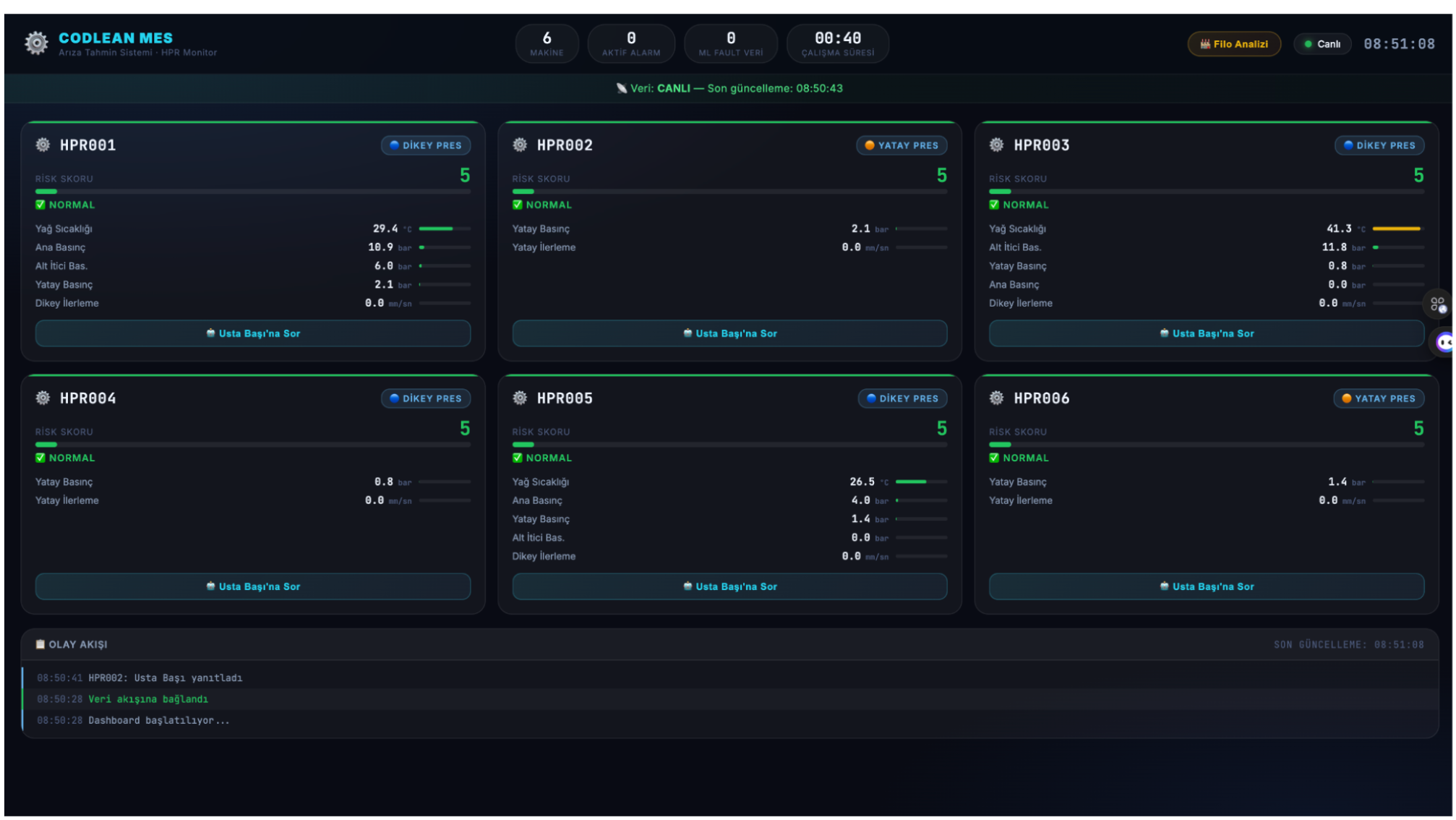
I designed, built and delivered an operational AI engine for fault prediction using real customer machine data. The live dashboard, predictive model, local LLM and multi-agent analysis worked together as one system.
01 / The challenge
Machine data matters when it leads to a clear next action.
Operators needed live status, a developing-fault signal, the evidence behind it and a practical recommendation rather than an unexplained score.
02 / What I built
One connected path from sensor reading to explanation.
I owned the AI engine end to end: data ingestion and validation, predictive and explainability layers, local model integration, specialized agents, APIs and the operator-facing analysis flow.
- 01 / 04
Live data
Kafka streams brought real HPR machine readings into the system. Validation and state management made the signals available for monitoring and analysis.
- 02 / 04
Prediction & evidence
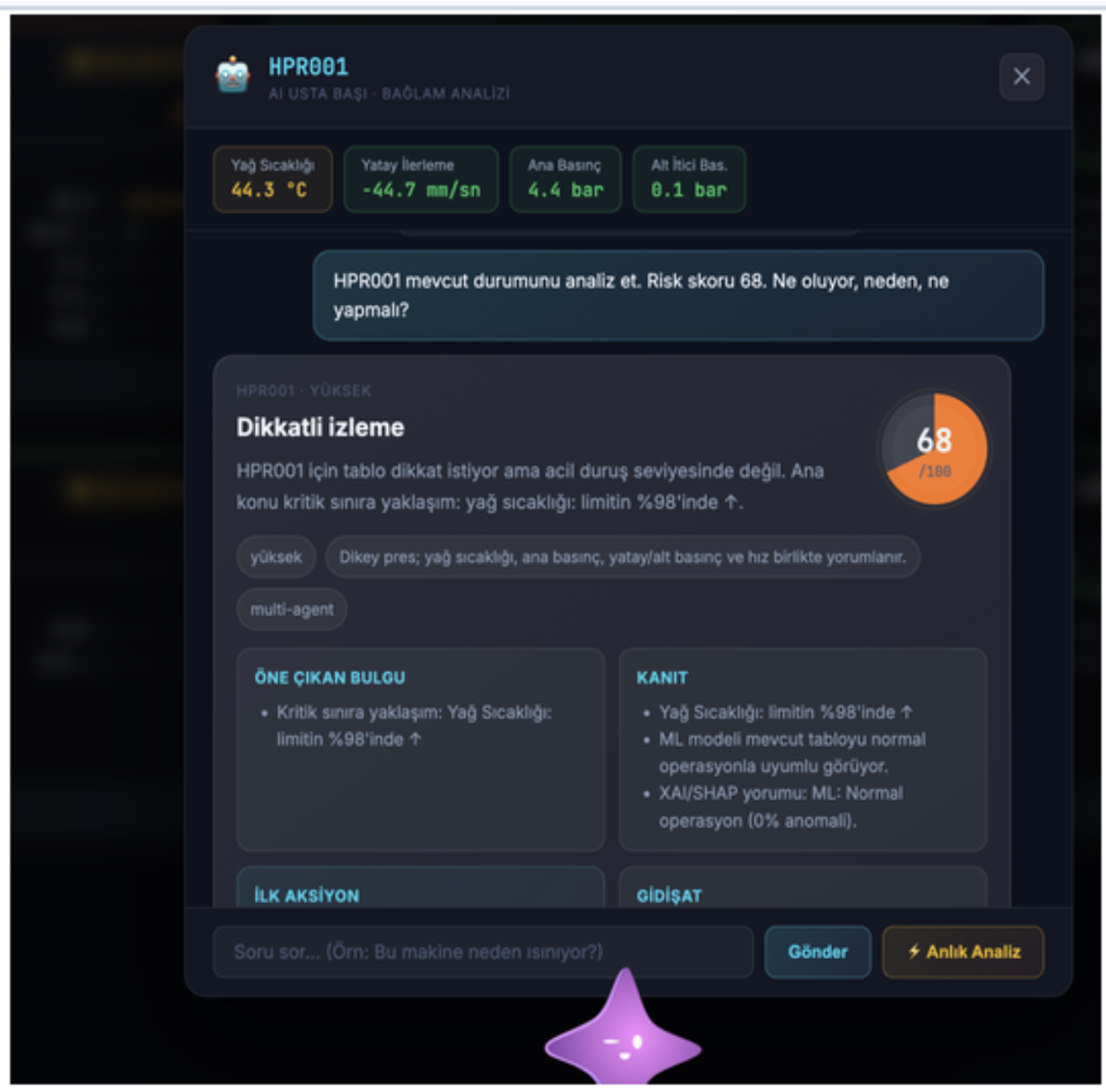
XGBoost fault prediction, risk scoring, engineering rules, and SHAP / DLIME explanations turned sensor patterns into findings operators could inspect.
- 03 / 04
Local intelligence
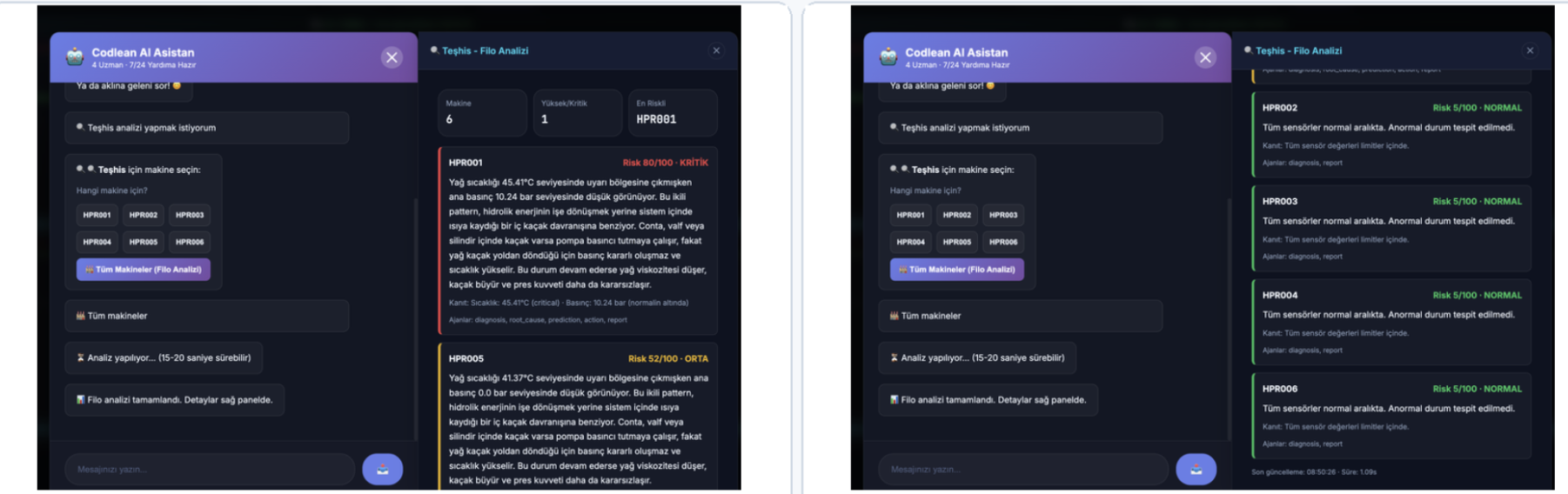
Llama 3.1 ran on-premise. Five specialized agents supported machine questions, diagnosis, actions, reports and fleet analysis.
- 04 / 04
Operator experience
The working dashboard showed live status, alerts, risk and an AI assistant. I handed it to the team for the next SCADA screen integration step.
03 / In use
The analysis was visible and actionable.
Screens from different stages of the working system. Some interface labels reflect earlier builds.
04 / Evidence
A working system with documented model results.
The AUC is reported in my current engineering CV. It describes the predictive model, not a measured reduction in factory downtime. I do not present modeled downtime estimates as observed customer outcomes.
- Model AUC reported in CV
- 98.5%
- Specialized AI agents
- 5
- Customer machine data
- Real
05 / Delivery
Delivered as a functioning system.
Fault prediction, the locally running LLM, the agent workflow and the dashboard were used together with real customer data. At handoff, I delivered the project to the wider team for connection to SCADA screens. That integration was the next team step.